A Manuka label answers two separate questions: is it Manuka, and how much of the grading marker does it contain. Here is what is measured, who measures it, and how to check any jar in under a minute.
Nearly every guide to reading a Manuka honey label is written by a brand, about the grading scheme that brand belongs to. That is not dishonest, but it does mean the answer you get depends on who you ask.
This is the version without a scheme to sell. What is actually measured in Manuka honey, who measures it, which numbers on a jar are lab results and which are marketing, and how to check any jar in about a minute. In New Zealand or Australia.
Almost all the confusion comes from mixing up two separate questions:
Different tests, different questions. A big grading number does not establish authenticity, and passing the authenticity definition says nothing about the grade. Hold those two apart and a Manuka shelf gets much easier to read.
Since December 2017, New Zealand’s Ministry for Primary Industries has applied a scientific definition to honey labelled as Manuka for export. It is a government test, not a brand programme, and honey has to pass all five attributes.
| Attribute | Monofloral Manuka | Multifloral Manuka |
|---|---|---|
| 3-phenyllactic acid | ≥ 400 mg/kg | ≥ 20 and < 400 mg/kg |
| 2′-methoxyacetophenone | ≥ 5 mg/kg | ≥ 1 mg/kg |
| 2-methoxybenzoic acid | ≥ 1 mg/kg | ≥ 1 mg/kg |
| 4-hydroxyphenyllactic acid | ≥ 1 mg/kg | ≥ 1 mg/kg |
| Manuka pollen DNA | < Cq 36 (about 3 fg/µL) | < Cq 36 (about 3 fg/µL) |
Four chemical markers and one DNA marker. All five have to pass, at the thresholds for whichever category the honey is being labelled as.

Those two words are the most useful thing on a Manuka label, and the ones people skip over most.
Monofloral means the bees foraged mainly on Manuka. Multifloral means a bigger share of other flowering plants went in. What separates them is the threshold each chemical marker has to clear, and the monofloral bar is a lot higher on two of the four.
Here is the practical part. MPI’s testing regime applies to honey packed and labelled as monofloral or multifloral Manuka for export, and those two categories are what its definition sorts honey into. So on an export-labelled New Zealand jar you would expect to see one of them. If neither word appears anywhere on the jar, that is a fair thing to ask the seller about. It takes two seconds and it costs nothing.
MPI set the definition for honey labelled as Manuka for export. MPI has said honey sold domestically must meet all existing regulatory requirements, and that extending the Manuka definition to the domestic market needs further policy work. So a jar bought in a New Zealand supermarket is not automatically covered by the same test as one shipped overseas.
MGO stands for methylglyoxal, a compound that occurs naturally in Manuka honey. The number after it is a concentration: milligrams of methylglyoxal per kilogram of honey. MGO 263+ means the honey was measured at a minimum of 263 mg/kg.
That is the entire claim. A chemical marker used to grade Manuka honey, reported by a lab, in units you could check. Closer to the alcohol percentage on a bottle than to a star rating.
We go further into this one in a separate piece, including what the “+” is doing and why a higher number is not automatically a better jar: what MGO 263+ actually means on a label.
A number printed on a jar is a claim. What turns it into evidence is the document behind it. That document is a certificate of analysis, a lab record of what was measured in a specific lot of honey.
Any seller should be able to produce one. The honey we sell is graded MGO 263+ on the supplier’s certificate of analysis, and we will send you a copy if you ask. If a seller will not, that tells you something the front of the jar does not.
Some label language is measured. Some is not. Treat these as decoration until someone shows you a number:
None of these are illegal or necessarily dishonest. They just are not measurements, and it helps to know which is which before you pay extra for one.
Country of origin is required information on both sides of the Tasman, and it is easy to skim past on a busy front label.
There is also a distinction worth knowing. Honey packed into its retail jar before leaving New Zealand has a shorter chain of custody than honey shipped in bulk and packed somewhere else. Neither is wrong, and bulk-packed honey is not fake. But if traceability matters to you, the packing statement tells you more than the flag on the front.
Australian producers are, as it happens, legally entitled to use the name Manuka. The tree is native to both countries and the attempt to restrict the term to New Zealand honey failed. We have covered what that means for a buyer in Australia here: New Zealand vs Australian Manuka honey.
None of these are graded, and none of them follow from the number on the front.
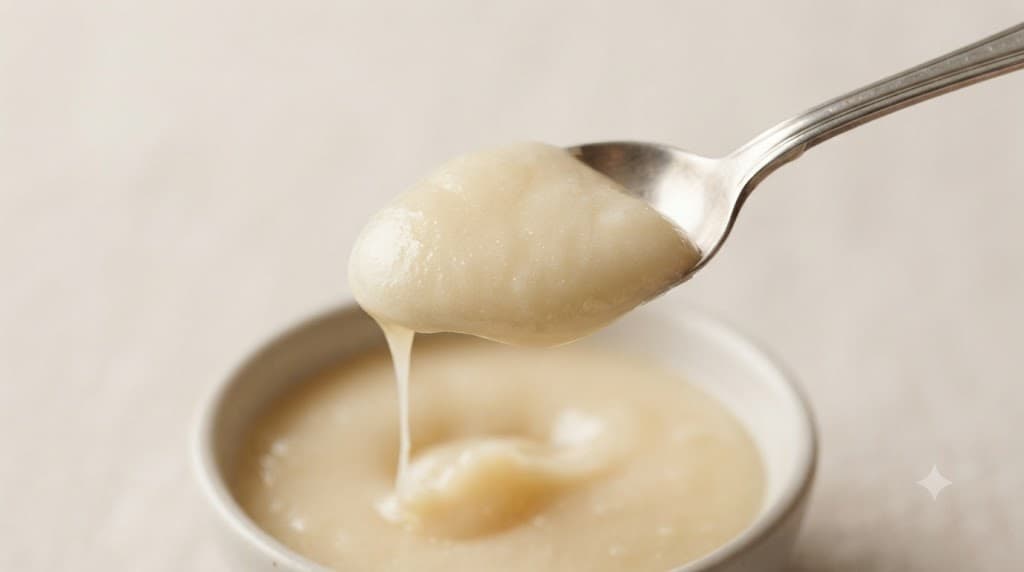
Texture is a processing choice. Creamed honey has been controlled-crystallised to a smooth, spreadable consistency. Runny honey has not. Ours is creamed. Neither is better honey. They behave differently on a spoon, and that is all.
Colour and flavour shift with the season and the floral source. Two jars at the same grade, from different harvests, can look and taste noticeably different. That is normal for an agricultural product, not a fault.
This one surprises people, so it is worth stating plainly.
Manuka honey is sold as food in New Zealand and Australia. Under the Australia New Zealand Food Standards Code, food cannot carry therapeutic claims, meaning statements that it treats, prevents or manages a condition. That rule applies to every seller in both countries, including us.
So when a jar or a product page puts a grading number next to language about what the honey will do for you, the label has reached past what the measurement supports. The measurement is a concentration of one compound. A seller who stops there is not being cagey. They are staying inside the rules.
Everything above, as a shelf routine:
For most people the honest answer is a mid-range one. The grading number climbs steeply in price and describes a concentration of one compound rather than anything you will taste.
If you are spreading it on toast, stirring it into yoghurt or taking a spoonful in the morning, a mid-range grade covers it. We sell one grade, MGO 263+, in 250g and 500g jars and multi-jar packs. One honey we can document is more use to you than a wall of numbers that would need explaining away.
It is a higher concentration of methylglyoxal, measured in mg/kg. It is not a broader quality score, and it does not describe taste, texture or colour.
That the figure is a minimum rather than an exact result. Concentration varies between lots, so grading is done to a floor. A lot measuring 271 mg/kg and one measuring 290 mg/kg can sit in the same tier.
No. MGO is the grading marker. Authenticity is a separate question, answered by MPI’s five-attribute definition: four chemical markers plus Manuka pollen DNA.
No. Creaming is controlled crystallisation, a texture choice made during processing. It is independent of grade.
Ask the seller. For the honey we sell, send us a message and we will email you the certificate of analysis for the MGO 263+ grade.
A Manuka label answers two questions at once, and they are easy to confuse. Authenticity is settled by MPI’s five attributes, and summarised on the jar by the words monofloral or multifloral. The grade is a concentration of methylglyoxal in mg/kg, and it means something only if somebody can show you the certificate behind it.
Everything else on the front of the jar is either unmeasured or not allowed. Read for the measurements and the documents, and the rest of the shelf stops being confusing.
The honey we sell is graded MGO 263+ on the supplier’s certificate of analysis. That is the lab record behind the number on the jar, and we will email you a copy. No purchase needed, and no form beyond your email address.
Questions about grading, sizes or delivery to New Zealand and Australia go to the same place: info@puresummit.co.nz.