MGO 263+ is a laboratory measurement, not a quality score. Here is what the number records, where it comes from, and the three things it does not tell you.
Pick up a jar of Manuka honey in New Zealand or Australia and there is a number on the front. MGO 263+. MGO 100+. MGO 830+. That number is doing a lot of work on the label, and almost nobody explains it.
So here is what MGO 263+ is, what the lab measured to get it, and what it does not tell you.
MGO stands for methylglyoxal. It is a compound that occurs naturally in Manuka honey. The number after it is a concentration: milligrams of methylglyoxal per kilogram of honey.
MGO 263+ means the honey was measured at a minimum of 263 mg per kilogram. That is the whole claim. It is a chemical marker used to grade Manuka honey, reported by a lab, in units you could check yourself.
This matters because the number often gets treated like a score, as if 263 were a mark out of something. It is not. It works more like the alcohol percentage on a bottle. It tells you how much of one compound is in there. Anything beyond that is interpretation, and interpretation is where labels get loose.
It is easy to read MGO 263+ as just 263. But the plus sign is not decoration. It means the figure is a minimum, not an exact result.
Honey is a natural product, so methylglyoxal levels vary from lot to lot. Grading to a floor is how the industry handles that. A lot measuring 271 mg/kg and a lot measuring 290 mg/kg can both sit in the same tier, and the label states the number they both cleared.
So MGO 263+ promises “at least this much”, not “exactly this much”. If you want the real figure for a specific lot, that sits on the certificate of analysis rather than the front of the jar. One more reason the document is worth asking for.
The MGO 263+ figure we sell against is the grade on the supplier’s certificate of analysis for this honey. A certificate of analysis is a lab document. It records what was measured in a specific lot, including the methylglyoxal level behind the number on the label.
We did not pick the figure, and we do not run the testing ourselves. If you want to see the measurement rather than take the label’s word for it, we will send you the certificate. That is what it is for.
Worth saying plainly: “MGO 263+” printed on a jar is a claim. A claim you cannot trace back to a document is just typography.
This is the part most grade explainers skip, and it is the part that actually helps you shop.
| What people assume MGO covers | Does it? | What actually answers it |
|---|---|---|
| How much methylglyoxal is in the honey | Yes | MGO, in mg/kg, on a certificate of analysis |
| Whether the honey is genuinely Manuka | No | MPI’s five-attribute definition: four chemical markers plus Manuka pollen DNA |
| Whether it is monofloral or multifloral | No | The same MPI definition, at different thresholds |
| How it tastes | No | Season and floral source. Not graded at all |
| Whether it is runny or spreadable | No | Whether it was creamed, which is a processing choice |
| Country of origin | No | The origin statement on the label |
Methylglyoxal is the grading marker. It is not the authenticity test. New Zealand’s Ministry for Primary Industries uses a separate five-attribute definition to decide whether honey can be labelled Manuka for export. That is four chemical markers plus a Manuka pollen DNA marker. Different tests, different question. A high MGO number on a jar says nothing by itself about whether the honey passed that definition.

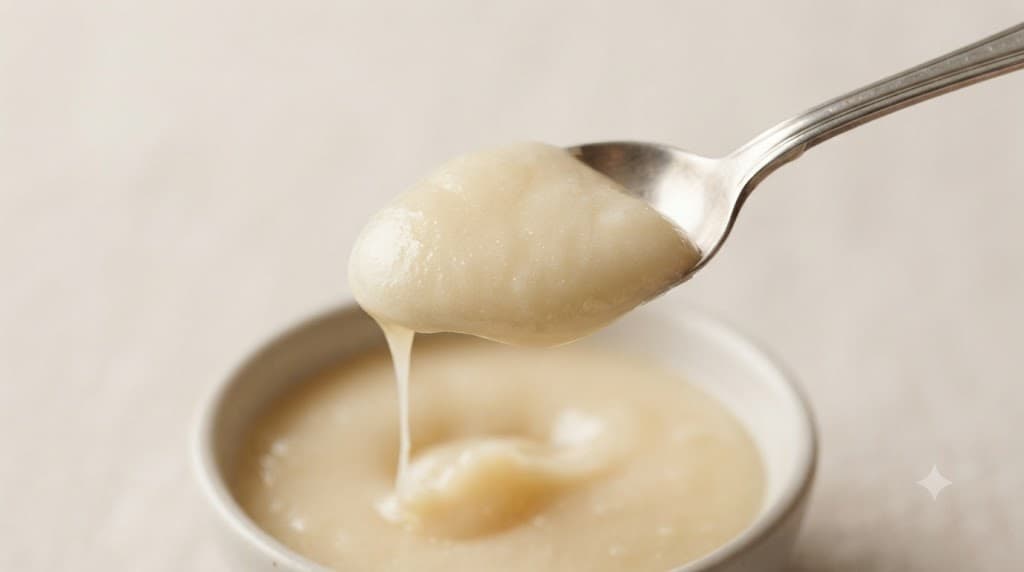
Two jars at the same grade can be quite different to eat. Ours is creamed, which means it has been controlled-crystallised to a smooth, spreadable texture rather than a runny one. That is a processing choice and has nothing to do with the MGO figure. Colour and flavour shift with the season and the floral source, not with the number.
Manuka honey is sold as food in New Zealand and Australia, and food cannot carry therapeutic claims. The Australia New Zealand Food Standards Code is clear on that. So when you see an MGO figure sitting next to language about what it will do for you, the label has reached past what the measurement supports. The number is a concentration. That is the honest extent of it.
Standing at a shelf, there is a reflex to read the highest number as the best product. It is worth resisting, for two reasons.
First, a higher MGO figure means a higher concentration of one compound. Nothing more. Second, the number drives the price steeply. If you are eating honey on toast or stirring it into yoghurt, you are paying for a concentration that makes no difference to any of that.
MGO 263+ sits in the middle of the range you will see on a New Zealand shelf. We sell one grade, in 250g and 500g jars and multi-jar packs. One honey we can document beats a wall of numbers we would have to explain away.
MGO 263+ means at least 263 milligrams of methylglyoxal per kilogram, measured by a lab and recorded on a certificate of analysis. It is a grading marker for Manuka honey. It is not a quality score, not an authenticity test, and not a statement about what the honey will do.
Read the number as a measurement rather than a rating and the whole shelf gets easier. A lot of label copy starts to look like what it is.
The honey we sell is graded MGO 263+ on the supplier’s certificate of analysis. That is the lab record behind the number on the jar, and we will email you a copy. No purchase needed, and no form beyond your email address.
Questions about grading, sizes or delivery to New Zealand and Australia go to the same place: info@puresummit.co.nz.
This article is part of our full guide: Manuka honey grading explained, and how to read any label.