
How is MGO measured? What a laboratory actually does to a jar of manuka
MGO is a laboratory measurement in milligrams per kilogram. Here is how it is taken, what the certificate behind it shows, and what the test cannot tell you.
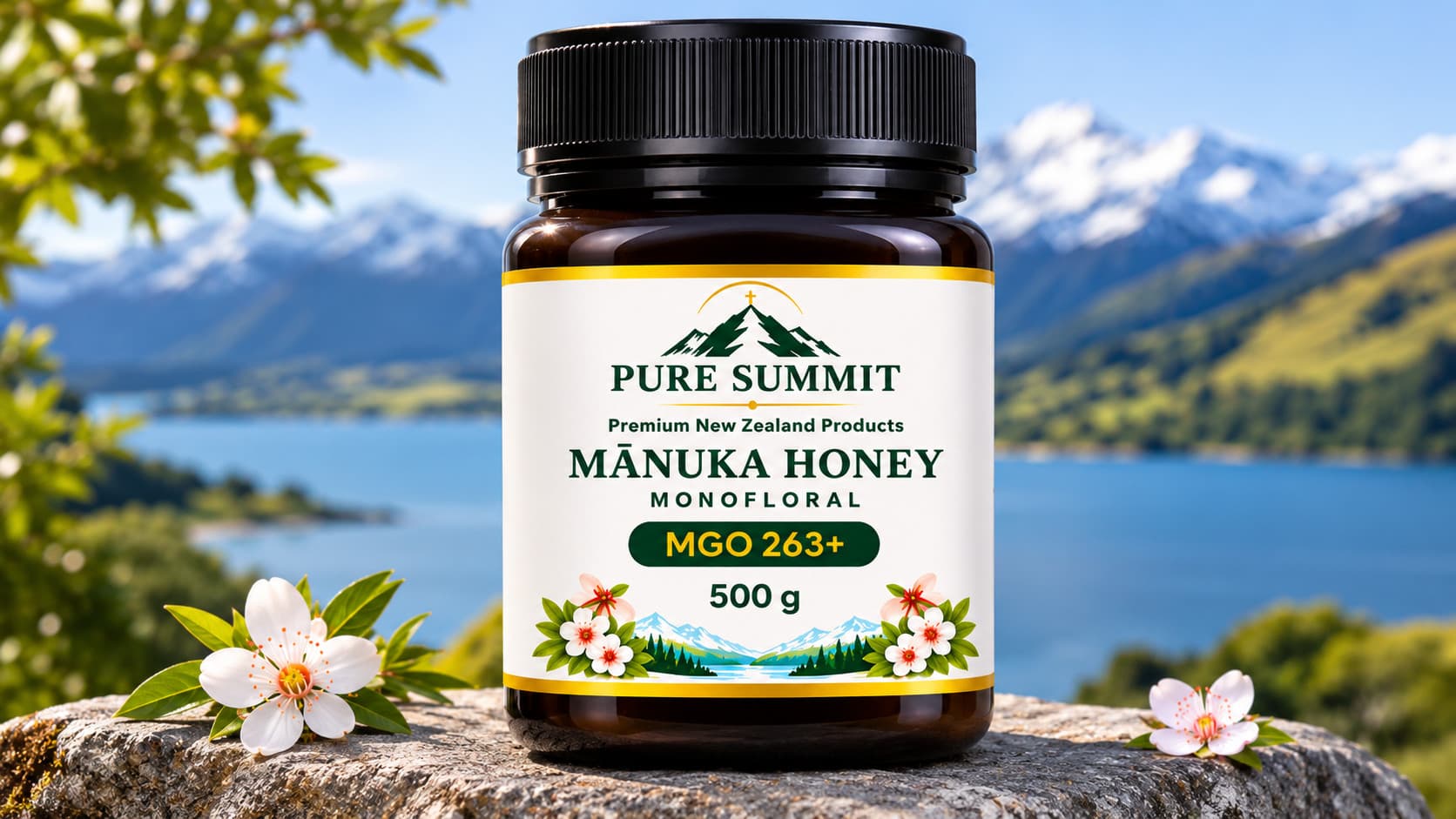
Every jar of graded manuka honey carries a number. MGO 263, MGO 400, MGO 1000. Somebody measured that, in a laboratory, before it was printed.
Most people never see how. Here is what the test is, what it can tell you, and what it cannot.
What is being measured
MGO stands for methylglyoxal. It is a compound that occurs naturally in manuka honey, and the grade is simply how much of it is in the jar.
The unit is milligrams per kilogram. MGO 263 means at least 263 milligrams of methylglyoxal in every kilogram of honey. That is a concentration, the same way a label might tell you grams of sugar per 100g. It is not a score out of anything, and the number is not a percentage.
Worth being precise here, because the wording on jars invites confusion. The figure is a floor rather than an exact reading. We go into why in what MGO 263+ actually means on a label.
What the laboratory does
The honey has to be turned into something an instrument can read, so the test runs in a few stages.
A sample is taken from the lot. Honey is not uniform. A drum filled over several days will not be identical top to bottom, so the sample has to represent the batch rather than one spoonful of it. This is why a grade belongs to a lot, not to a jar.
The sample is prepared. Honey is mostly sugar, and sugar gets in the way of reading one compound present in milligrams. The sample is diluted and treated so the methylglyoxal can be detected cleanly against everything else in there.
The compounds are separated. This is usually done by liquid chromatography, which pushes the prepared sample through a column. Different compounds move through at different speeds, so they come out separated in time rather than all at once.
The amount is calculated. A detector records how much of the compound came through. That reading is compared against standards of known concentration, which is what turns a signal into a number in milligrams per kilogram.
The output is a figure with a method and a date attached. That document is the certificate of analysis, and it is the only reason the number on a jar means anything.
Why the paperwork is the point
A number printed on a label is typography. Anyone can print 263. What makes it a measurement is that a laboratory produced it and wrote it down, and that somebody can show you the document.
So the useful question when you are comparing jars is not which number is biggest. It is whether the seller can produce the certificate for the honey in that jar. A seller who can is telling you more than a seller with a larger figure and nothing behind it.
What this test does not do
This is where most explanations stop, and it is the part that matters.
It does not prove the honey is manuka. Measuring methylglyoxal tells you how much methylglyoxal is there. It says nothing about which flowers the bees worked. Authenticity is a separate test. Honey labelled as manuka for export from New Zealand has to be tested against the Ministry for Primary Industries definition. That definition looks at four chemical markers and one DNA marker. The same test is what places a batch as monofloral or multifloral manuka.
Two different tests, two different questions. A high MGO figure on honey that has not been authenticated is a number without a subject.
It does not describe texture, colour or taste. Those come from the season, the floral source and how the honey was processed afterwards. Ours is creamed, which is a processing choice and has nothing to do with the grade.
It does not tell you what the honey will do. Manuka honey is sold as food in New Zealand and Australia, and under the Food Standards Code food cannot carry therapeutic claims. An MGO figure is a measurement of a compound. Read it as a measurement.
Reading a certificate when you get one
If a seller sends you one, four things are worth checking.
- The figure and its unit. It should be milligrams per kilogram, and it should match what is printed on the jar.
- What was tested. A certificate names the lot it belongs to. A grade with no lot attached is a brochure.
- The date. Honey is tested at a point in time, and the certificate should say when.
- Whether it covers authenticity as well. Some certificates report the MPI markers too, some report only MGO. They are not the same thing.
You do not need to understand the method to use the document. You only need to see that one exists.
Where our own number comes from
We buy finished, graded honey and sell it. We keep no hives and we run no tests. The MGO 263+ on our label is the figure on the supplier’s certificate of analysis, printed exactly as it appears there.
We will email you that certificate if you want to read it, with nothing to buy first. Ask for a copy from the lab reports page.
The short version
MGO is measured in a laboratory. The compounds in a prepared honey sample are separated, then the amount of methylglyoxal is calculated and reported in milligrams per kilogram. The test answers one question well. It says nothing about authenticity, texture or effect. The certificate is what turns a printed number into a measurement, so ask for it.
Want the number explained rather than the method? Start with our guide to manuka grading. Or see where MGO 263+ sits on the scale.
More from the Journal
Does MGO increase over time in a jar of manuka honey?
17 November 2026Post by Alex
MGO vs methylglyoxal vs DHA: which word means what
17 November 2026Post by Alex

Is MGO 263+ a high grade? Where it sits on the manuka scale
10 November 2026Post by Alex

Manuka Honey Grading Explained: What Is Measured and How to Read Any Label
29 September 2026Post by Alex